

Editor’s note: The symmetry of 52 weeks in a year and 26 letters in our alphabet inspired us here at The Eatonton Messenger to embark on an alphabetical journey of Putnam County every other week this year, looking at something – or someone – unique, significant, unusual, or just plain interesting.
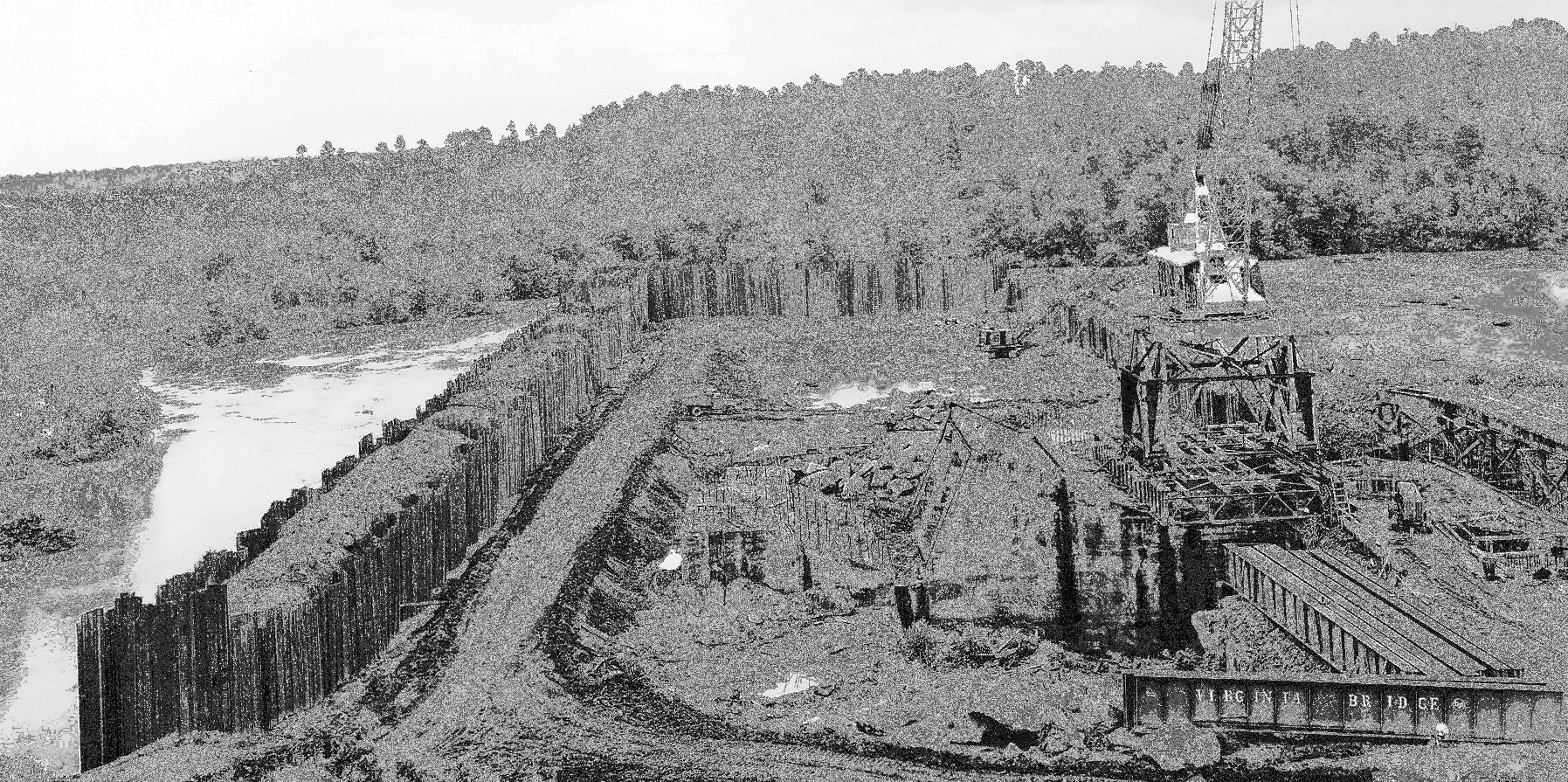
The history of Lake Sinclair, or the Furman Shoals project as it was known in its formative stages, dates back to 1929, when Georgia Power Company (GPC) initially drew up plans to dam and harness the power of the Oconee River. By necessity, it also would create the man-made lake that now defines Putnam County’s southern and much of its eastern borders.
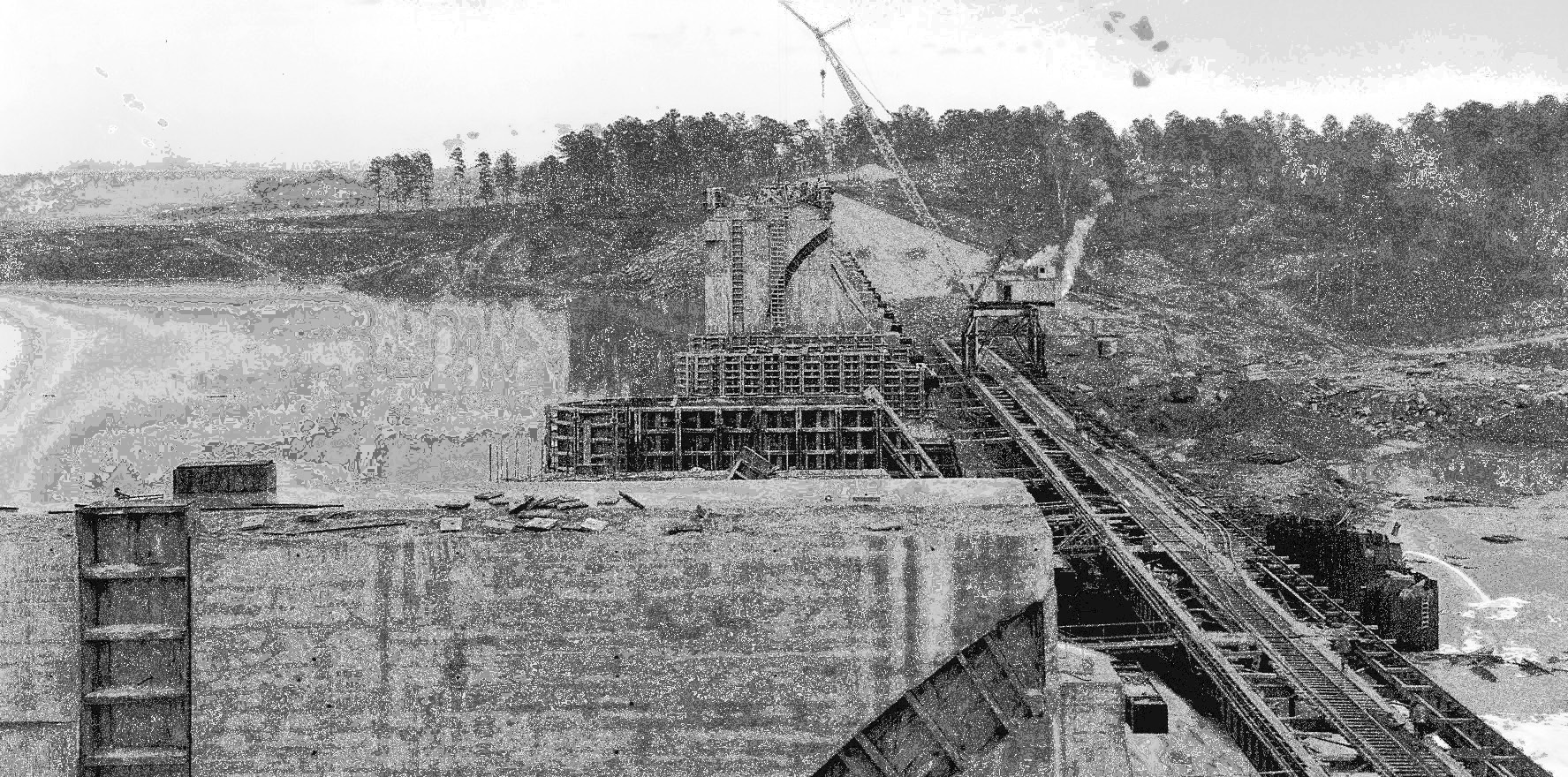
Work on the dam actually began that summer and about a third of the dam had been completed by late 1930, according to Windee Little’s Reminiscent – A Pictorial History of Eatonton-Putnam County. However, the Great Depression had worsened in the United States and throughout most of the industrialized world, forcing all work at Furman Shoals to be shut down as of Dec. 31, 1930. As with most major expenditures of the time, the project was put on hold indefinitely, which lasted throughout the decade.
Eventually, just as the ‘30s and the Depression came to an end, military unrest in Europe quickly turned into World War II. The U.S. was eventually drawn into the conflict late in 1941 after the bombing of Hawaii’s Pearl Harbor, which again drew attention – and men and resources – away from Georgia Power’s long-range plans.
A brief attempt to resurrect the Furman Shoals job came in March 1942, but with tight labor and materials markets it was determined that completing the project would require more than two years and about $5 million, so it was shelved again for almost the rest of the decade.
Finally, 1945, with Hitler defeated and the U.S. returning to prosperity, the Furman Shoals project was back on the table. A report in The Eatonton Messenger dated Feb. 3, 1949, revealed Georgia Power Company’s board of directors had “approved a construction program involving the expenditure of 24 million dollars, which includes the completion of the Furman Shoals hydroelectric plant near Milledgeville.”
The dam was planned as a combination of “masonry and earth fill,” stretching 3,000 feet and 100 feet tall. The company quite accurately predicted the resulting roughly checkmark-shaped lake would be approximately 15,000 acres and would hold about 12 billion cubic feet of water.
With a ready workforce motivated to maintain American values following the war, the job went quickly.
GPC literature states the Furman Shoals project ultimately met most aspects of its original proposed design, suggesting the nearly two-decade delay in construction significantly inflated its cost and obviously scheduling, but not its basic design or specifications.
“Even the turbines purchased in 1929 from the S. Morgan Smith Company were installed, and most of the electrical equipment was purchased from the General Electric Company as originally planned,” the GPC publication states.
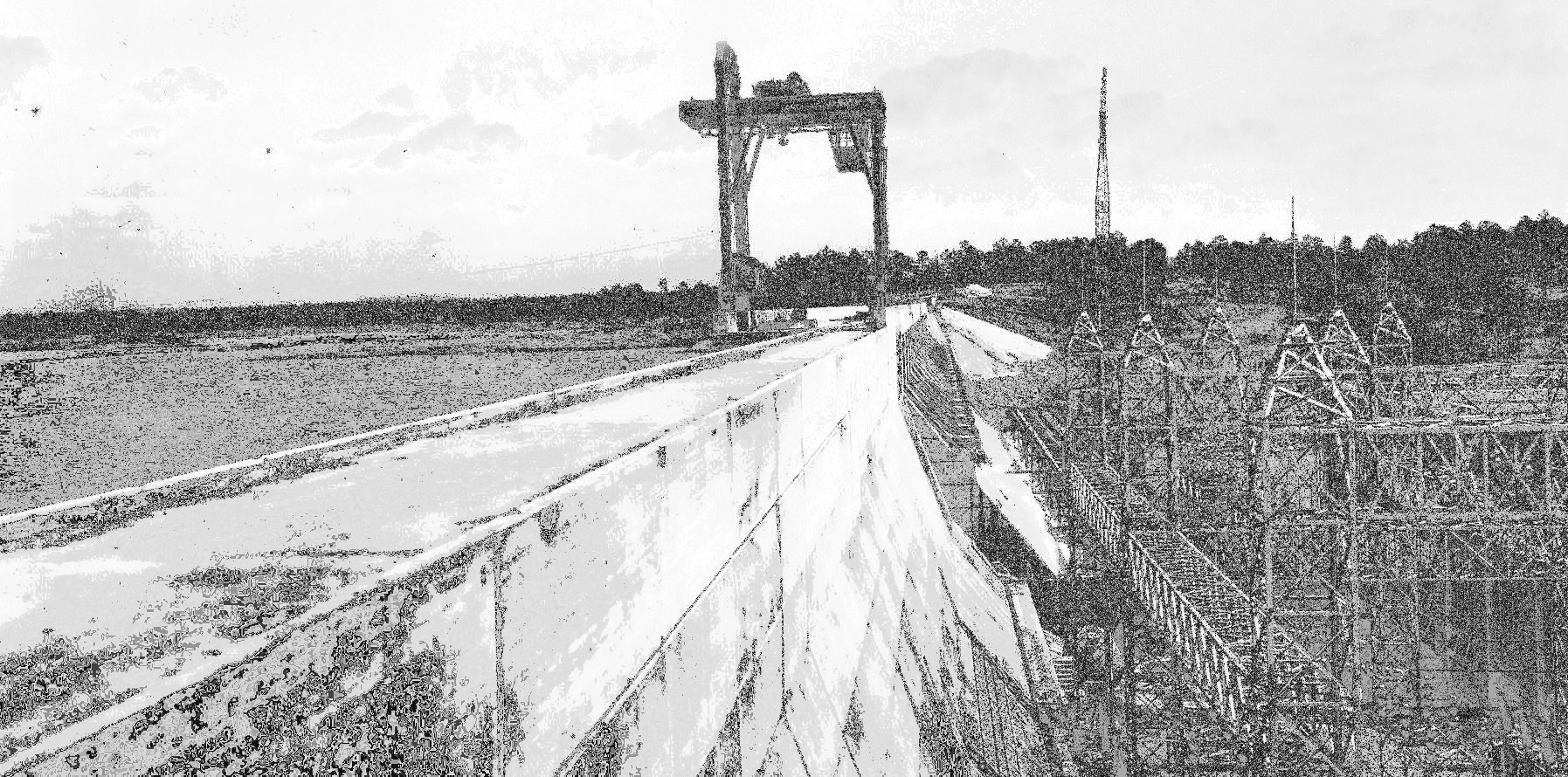
Nearing the 24-gate dam’s completion, it was officially named the Sinclair Dam, in recognition of Superintendent of Operations B. W. Sinclair as it reached completion in February 1953, and its twin generating stations entered operation. According to The Messenger in 1949, GPC President C.B. McManus said the new water-driven powerplant would produce about 160,000-kilowatt hours of electricity per year, representing a massive increase to the region.
However, that boost was short-lived as new residents, businesses and industries settled into what once was a very rural, sparsely populated area of Georgia. By 1961, construction began on the Harllee Branch Steam Plant alongside the lake just north of Milledgeville.
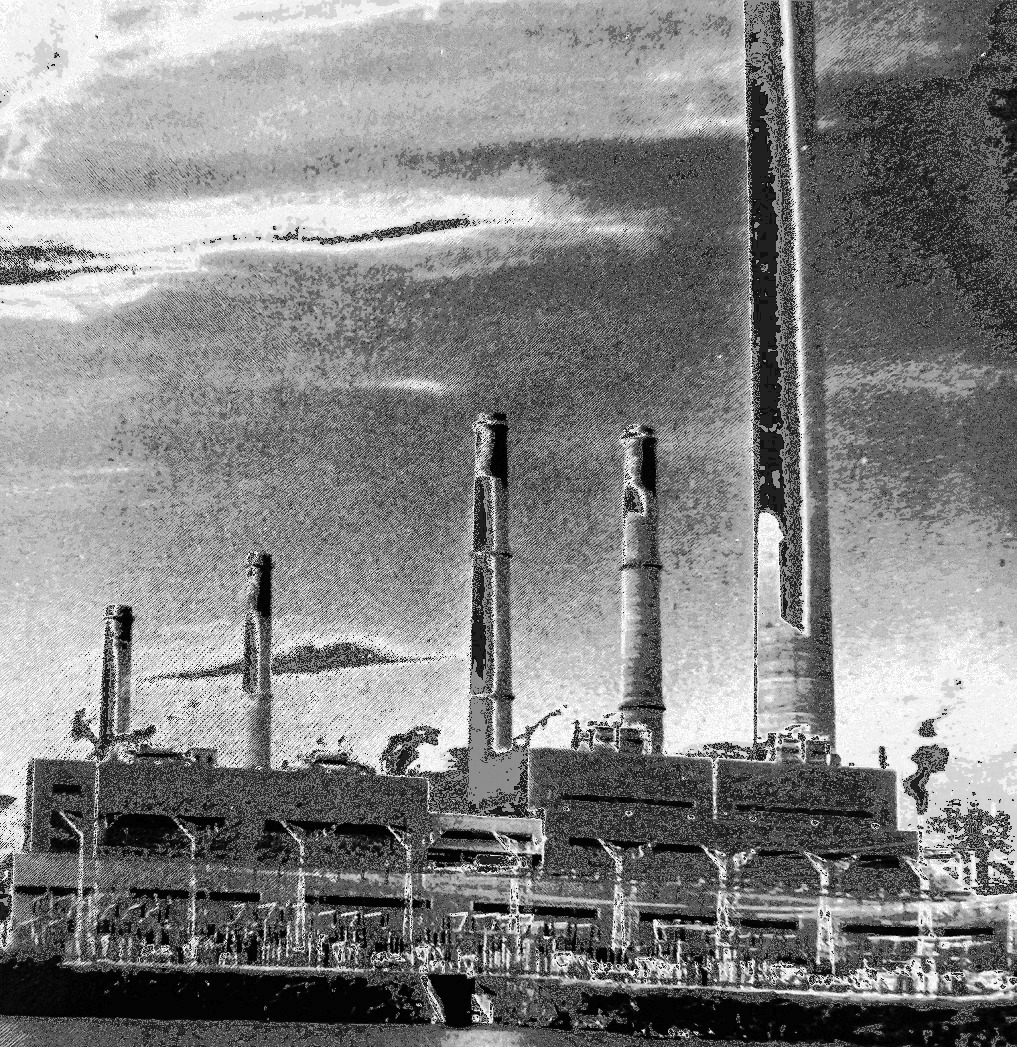
Named after Harllee Branch, GPC president from 1951-’57 and a former Southern Company chairman, within four years the first of four coal-fired power units was in operation at what was known simply as Plant Branch.
By 1968 all four units were in full-power mode, capable of delivering more than 1.5-million kilowatt hours of electricity annually. At 1,001 feet its primary smokestack, the largest of five, was among the tallest in the world and served as a striking visual beacon, particularly for boaters winding their way through Lake Sinclair’s complicated mixture of twists and turns miles away in all directions.
Plant Branch was decommissioned in April 2015 and on Oct. 17, 2016, its iconic smokestack was toppled to the ground, with explosive building demolition following a year later and cleanup of the site completed late in 2018.
The dam remains where Lake Sinclair now boasts its deepest water of about 90 feet and encompasses more than 15,300 acres at its surface.
Georgia Power continues as the lake’s owner and steward and wields ultimate power over how its approximately 417 miles of ragged shoreline is used, with a combination of GPC-leased and fee-simple residential lots and very few lakeside commercial properties for a body of water its size.
As a result, Lake Sinclair is known as one of the cleanest lakes in the state, though it often gets muddied after a hard rain. Regardless, fish caught in Lake Sinclair carry no eating restrictions and the lake is a popular venue for many fishing tournaments, poker runs, and practically year-round recreational boating.