
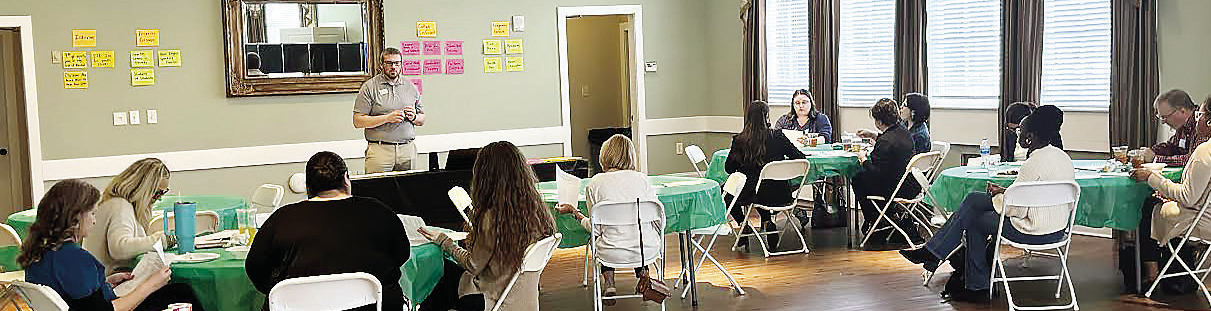
The Putnam County Family Connection Collaborative (PCFCC) held its monthly meeting on Feb. 28 at the Plaza Arts Center, where Georgia Family Connection Partnership (GaFCP) Regional Manager Adam Swymer welcomed new and returning members.
Representatives from healthcare and education sectors, as well as from local businesses and churches were present, and following introductions, January’s meeting minutes were approved.
The past meeting reviewed Putnam County data using the county profile and birth to age-21 profile. This meeting followed up by focusing on a plan to address the indicators discussed during the annual data review.
PCFCC aims to strengthen the community by supporting those who face challenges such as food insecurity, drug use, and more. Therefore, the indicators focus on issues involving risky behaviors in children and teenagers.
Among those indicators were: the rate of 9th-grade students reporting perception of negative risk with alcohol consumption, STD incidence for youth ages 15 to 19 years old, and children absent from more than 15 days of school. This data came from the KIDS COUNT website.
From these indicators, the collaborative can focus on priority groups that may require help on these issues. These groups may include families living in poverty, non-English speaking families, students with disabilities, parents who lack secure employment, and more.
After addressing indicators and priority groups, those in attendance were asked to think of any other indicators included in the data that may be important to focus on as well.
Teen pregnancy was brought up as another indicator that may be worth focusing on. “Maybe consider addressing the teen pregnancy rate too, since they are connected,” one attendee suggested, referring to the STD incidence statistic indicator.
Another attendee asked if domestic violence was being prioritized. “Because I know teenagers in high schools are also experiencing domestic violence, dating violence, about the same rate as adults, if not more,” she said. “Most of the people who end up in adult abusive relationships start those relationships as teens.”
By identifying issues and priority groups, as well as discussing new ones, the collaborative can start planning for FY25. Attendees were asked to think of collaborative infrastructure and programs and services to implement to address the previously discussed indicators.
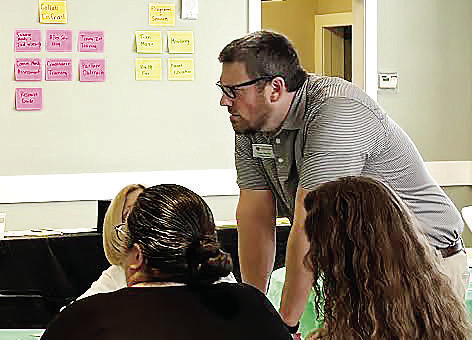
PCFCC attendees spoke in groups about possible services and infrastructure for the collaboration to include in the plan. Ideas involved spreading awareness for available resources through email and social media, collaborating with other neighboring collaborative groups, encouraging after-school programs, creating a resource guide, and more.
Lastly, attendees voted on which single indicator and one priority group they believe the collaborative needs to pay the most attention to. After voting for those, they could vote for which collaborative infrastructure or program/services they believed would be most impactful in the plan.
PCFCC is made up of community members who want to make the county a better place by utilizing local solutions. For more information, visit putnam.gafcp.org.